
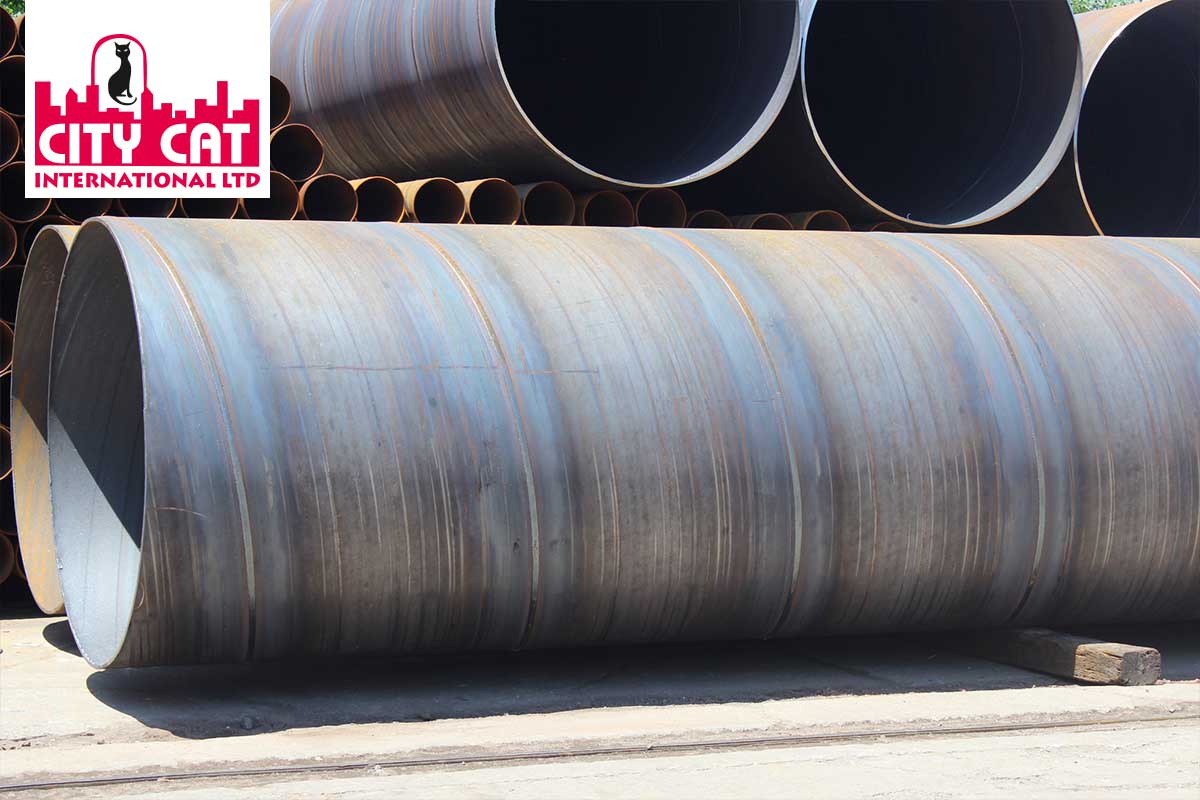
Welded pipe starts out as a long, coiled ribbon of steel called a skelp. The skelp is cut to the desired length, resulting in a flat rectangular sheet. The width of that sheet’s shorter ends will become the pipe’s outside circumference, a value that can be used to calculate its eventual outside diameter.
The rectangular sheets are fed through a rolling machine that curls the longer sides up toward one another, forming a cylinder. In the ERW process, high-frequency electrical current is passed between the edges, causing them to melt and fuse together.
An advantage of ERW pipe is that no fusion metals are used and the weld seam cannot be seen or felt. That’s opposed to double submerged arc welding (DSAW), which leaves behind an obvious weld bead that must then be eliminated depending on the application.
Size Range
Lenghts can also be supplied based on requirements
Type
Carbon, Low-Alloy, stainless steel, duplex, nickel-alloy, etc
Specification
Plain Ends (PE), Threaded Ends (TE), Beveled Ends